TCP 3-Way Handshake Process
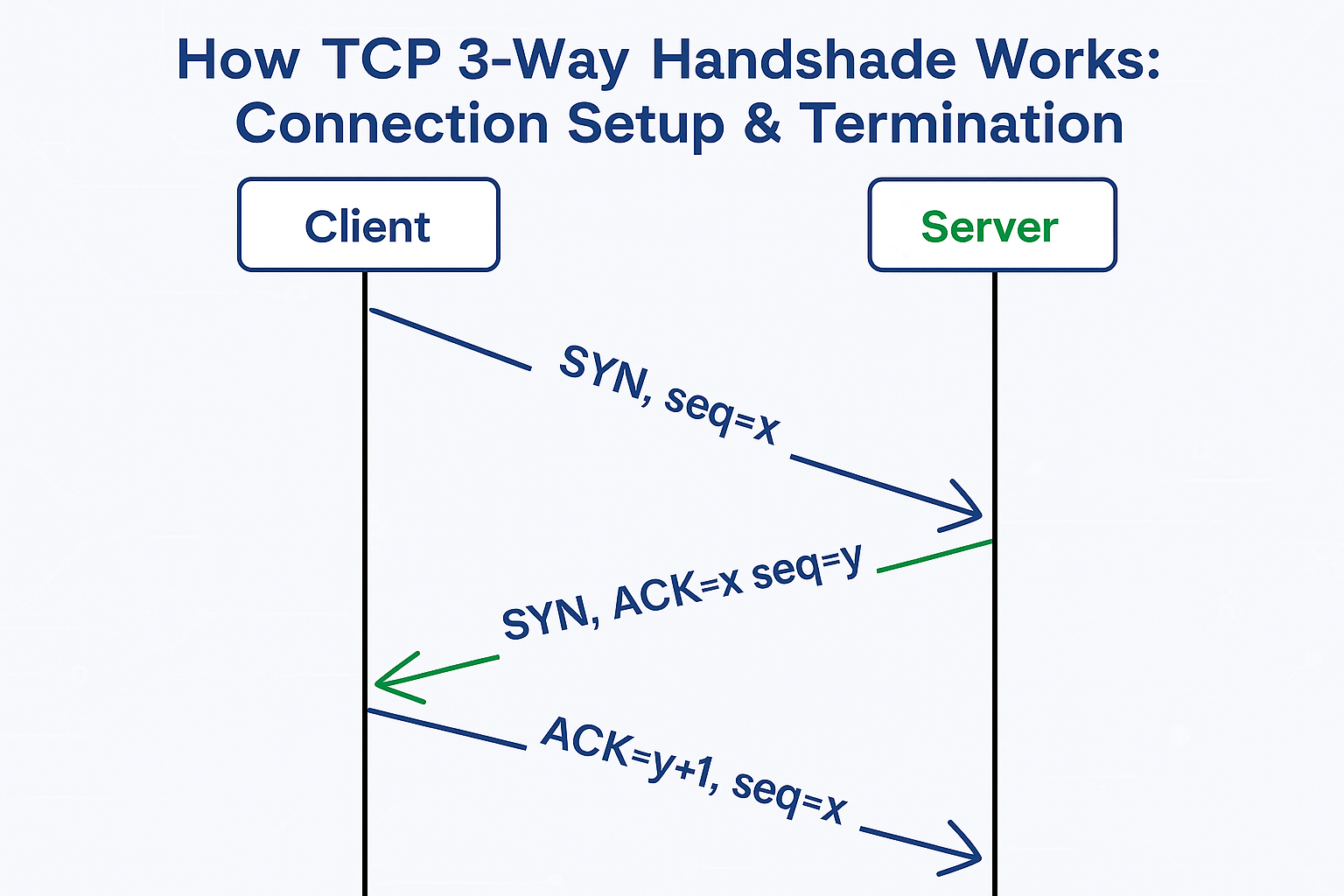
Transmission Control Protocol (TCP) provides a secure and reliable connection between two devices using the 3-way handshake process. TCP uses the full-duplex connection to synchronize (SYN) and acknowledge (ACK) each other on both sides. There are three steps for both establishing and closing a connection. They are − SYN, SYN-ACK, and ACK.
3-Way Handshake Connection Establishment Process
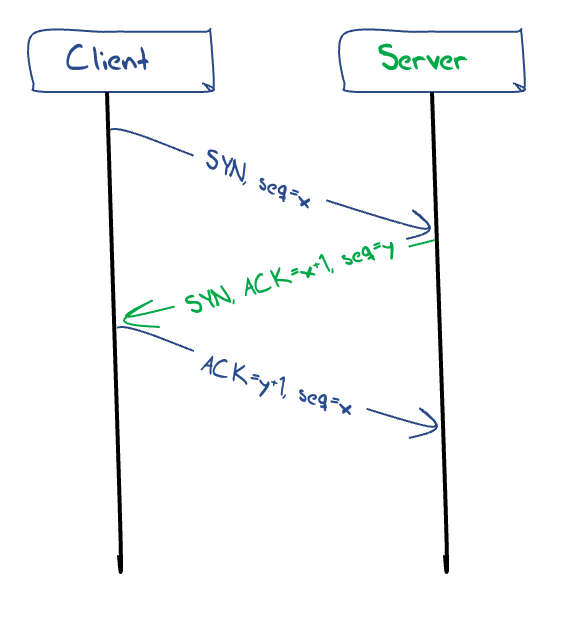
The following diagram shows how a reliable connection is established using 3-way handshake. It will support communication between a web browser on the client and server sides whenever a user navigates the Internet.
.jpg)
1. The client starts the process and sets the SYN flag to 1
The client sends the message to the server by setting the SYN flag to 1.
The message contains some other information like sequence numbers(2000), maximum segment size, window size.
A sequence number is a randomly generated 32-bits number.
SYN - It stands for synchronization. It sends the message to the server to synchronize with the received sequence number.
The window size is used for the flow control. It denotes the capacity of the data that can be received.
For example - If the window size is 10000 and the maximum segment size is 1000. Then, the maximum number of data segments that should be transmitted is 10000/1000 = 10.
2. The server replies with (SYN+ACK)
After receiving the synchronization request from the client, the server sends the acknowledgment to the client by setting the ACK flag to 1.
It sends the Acknowledgment number (ACK) to the client which is just 1 greater than the received sequence number from the client. For example - If the sequence number received from the client is 2000 then the acknowledgment sent by the server will be 2001.
It denotes the next sequence expected by the sender.
In addition to this, the server also sends a randomly generated sequence number (suppose 4000 ) and sets the SYN flag to 1.
The server also sends its window size which is the buffer capacity of the server and maximum segment size to the client for flow control.
It is required so that none of the ends need to do the fragmentation of packets.
3 -Way Handshake Closing Connection Process
To close a 3-way handshake connection,
First, the client requests the server to terminate the established connection by sending FIN.
After receiving the client request, the server sends back the FIN and ACK request to the client.
After receiving the FIN + ACK from the server, the client confirms by sending an ACK to the server.
.jpg)
Conclusions:
The TCP 3-Way Handshake is like a polite conversation starter between two computers. Before they exchange any real data, they first greet each other (SYN), acknowledge the greeting (SYN-ACK), and confirm everything is good to go (ACK). This ensures a reliable, secure connection for communication. Likewise, ending the conversation uses a similar back-and-forth to close things gracefully. Understanding this process is essential for anyone diving into how the internet really works under the hood.


